

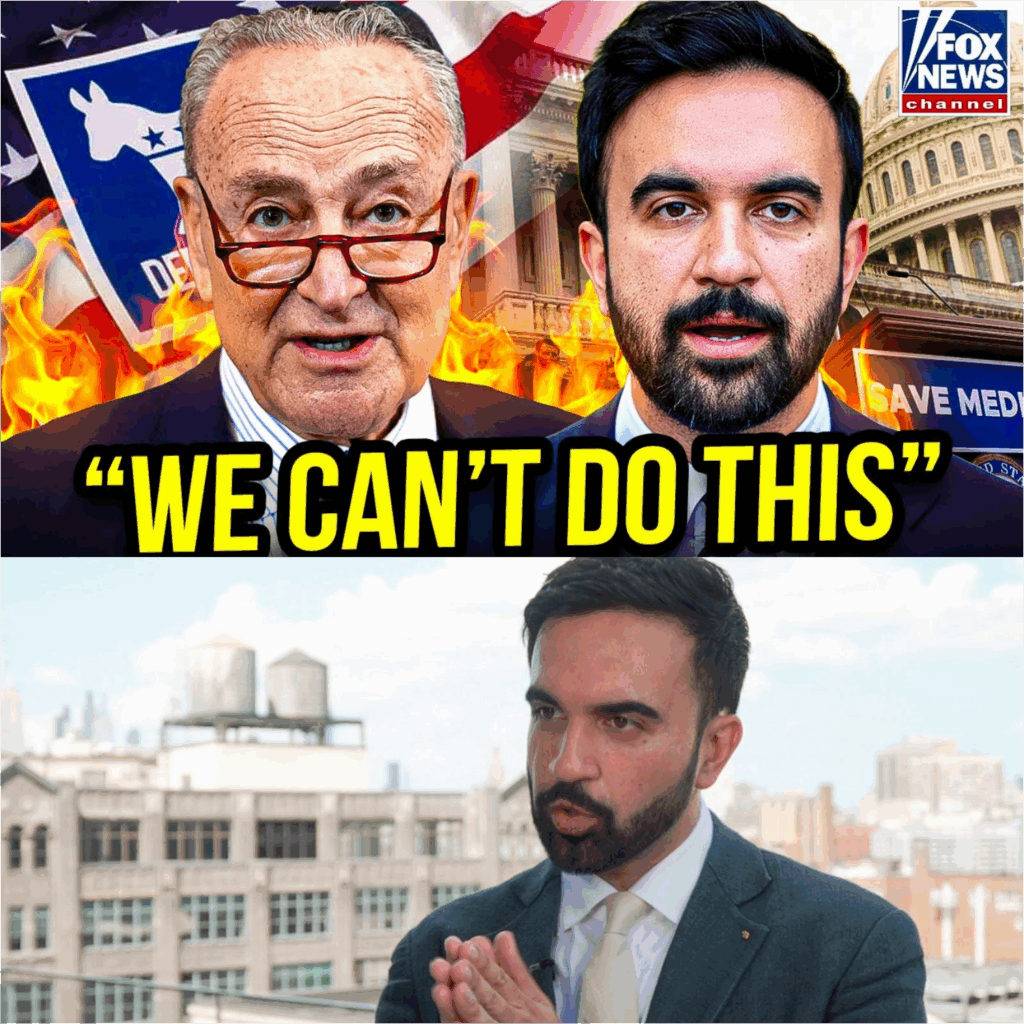
The aftermath of the recent election night has brought about a wave of introspection and, in some corners, outright dismay among establishment Democrats, particularly regarding the victory speech delivered by progressive candidate Zohran Mamdani. What was expected to be a moment of unifying triumph was swiftly marred by rhetoric that prompted accusations of a “character switch,” leading prominent voices, including CNN’s Van Jones, to suggest that Mamdani may have alienated potential allies and missed a critical opportunity for expansion.
The controversy surrounding Mamdani’s tone is intertwined with a broader political climate of intense polarization, highlighted by strategic maneuvers in Congress and the ongoing ideological battle within the Democratic coalition itself.
Zohran Mamdani, who secured a significant victory, immediately thrust himself into the national spotlight not with a message of broad inclusion, but with a highly charged, confrontational address. The commentary suggests that the warm, calm, and embracing persona Mamdani projected during his campaign—a figure perceived as close to working people—was conspicuously absent on the victory stage.
CNN analyst Van Jones articulated this feeling of betrayal and disappointment clearly.
“I think he missed an opportunity… The Mamdani that we saw on the campaign trail, who was a lot more calm, who was a lot warmer, who was a lot more embracing, was not present in that speech. I think his tone was sharp. I think he was using the microphone in a way that he was almost yelling, and that’s not the Mamdani that we’ve seen on TikTok and the great interviews and stuff like that.”
Jones’s analysis cuts to the core of the Democratic establishment’s anxiety: Mamdani’s rage-filled tone was not unifying. Jones expressed concern that the sharp, divisive rhetoric would lead many potential supporters to question whether they could “get on this train with him or not,” fearing he would prioritize “class warrior” tactics even in office. According to Jones, Mamdani’s failure to “open up and bring more people into the tent” could prove costly down the line.
The content of the speech further fueled these fears, particularly Mamdani’s direct, politically charged message seemingly directed at President Donald Trump. Mamdani was perceived as challenging the former President, with some analysts interpreting his words as a
Republican commentator Scott Jennings seized on this point, offering a stark “reality check” to Democrats supporting the progressive wing. Jennings noted that Mamdani began his speech by quoting
Jennings warned that this worldview, exemplified by Mamdani’s quote, “No problem too large for government to solve or too small important,” would inevitably translate into policies that Democrats’ traditional base might fear. Specifically, this vision, where the government is the solution for every issue, is a thinly veiled promise of sweeping
The underlying tension highlighted by these reactions is the internal conflict plaguing the Democratic Party between its pragmatic, establishment wing and the increasingly powerful, far-left progressive and democratic socialist factions.
The discourse surrounding ideological purity and political strategy was amplified by events related to the federal government shutdown. The transcript suggests that Senate Democrats, led by figures like
News reports indicated that Senate Democrats were suddenly “making moves toward reopening the government,” a move interpreted by critics as evidence that the shutdown was merely a
This perception of strategic manipulation only heightens the concerns raised about Mamdani’s approach: while the establishment is accused of playing calculated games, the progressive wing is simultaneously accused of being overly aggressive and divisive, leaving the party fractured on both tactics and tone.
While the analysis focused heavily on Democratic infighting and strategy, the transcript quickly pivoted to provide a significant reality check to the Republican Party following a night of overall disappointing results in key elections in states like New Jersey, Virginia, and New York City.
The key message from conservative commentators was that the GOP needs to abandon its reliance on simply framing the Democrats as “worse” and develop a compelling, independent platform.
Megan Kelly
Kelly and others advocated for a radical shift in focus, away from engaging in distracting internal battles and towards substantive issues impacting daily life.
Vivek Ramaswamy echoed this sentiment, delivering two key lessons for the GOP:
President Donald Trump, when asked about Mamdani’s fiery speech and the implied threat, offered a response that was both dismissive of the rhetoric and strategically controlling of the future dynamic.
Trump called Mamdani’s speech “very angry” and a “very dangerous statement for him to make,” advising that the young victor “has to be a little bit respectful of Washington, because if he’s not, he doesn’t have a chance of succeeding.”
Crucially, Trump emphasized his role as a necessary gatekeeper for federal resources and approval: “I’m the one that sort of has to approve a lot of things coming to him. So, he’s off to a bad start.”
While stating his desire to see New York City succeed, Trump made it clear that any future cooperation would require Mamdani to initiate the contact: “I would say he should reach out to us. I think he should reach out. I’m here.” This calculated response reinforces the political hierarchy and places the onus for reconciliation—and thus, success in securing federal support—squarely on Mamdani’s shoulders.
The post-election landscape is defined by internal ideological wars and profound strategic miscalculations on both sides, suggesting that the current period of political turbulence is far from over.
The career of Congresswoman Ilhan Omar has been consistently marked by intense political scrutiny, which recently reached a fever pitch following viral circulation of her remarks regarding Somalia. The commentary surrounding the video—in which Omar refers to the President of Somalia as “our president” and claims Somalia is “our home and our hearts”—has been seized upon by critics, including President Donald Trump, to demand her denaturalization and deportation.
This controversy illuminates a deeply polarizing debate over the boundaries of loyalty for naturalized citizens and the legal criteria for maintaining U.S. citizenship.
The recent calls for action against Omar are predicated on an interpretation of her public statements suggesting her primary allegiance may lie with her country of origin.
The commentary highlights two specific points from the leaked video:
“Our President”:
“Home and Heart”:
Critics interpret these remarks as an explicit admission of conflicting allegiance, arguing that an elected U.S. representative is required by oath to prioritize the United States above all other nations. The commentary asserts that such a conflict, if proven to guide her official actions, could constitute a failure of loyalty—a severe political charge.
The demand for Omar’s deportation is politically charged and relies on specific legal concepts regarding citizenship revocation.
As a naturalized citizen, Omar’s status is contingent upon fulfilling the requirements established during the naturalization process. The law allows for the revocation of citizenship (denaturalization) if it is proven that the individual obtained citizenship through fraud or willful misrepresentation of material facts.
The commentary links this mechanism to other unproven, long-circulating allegations:
Marriage Fraud: Critics persistently raise the unverified claim that Omar married her brother for immigration purposes. If such an act of fraud were ever proven, it could constitute grounds for denaturalization, as it would violate the oath of renunciation of foreign allegiance and involve material misrepresentation.
Failure of Allegiance: Beyond the marriage claim, critics argue that Omar’s recent comments themselves could be retroactively used as evidence that she never genuinely intended to renounce her former allegiance during the naturalization oath—a requirement that demands absolute fidelity to the U.S.
The political strategy here is clear: using the threat of denaturalization, a process legally contingent on proving fraud, to amplify a message of political disloyalty.
Adding fuel to the political fire, the commentary includes several strong, unverified claims regarding Omar’s personal finances and alleged corruption within the Somali-American community in Minnesota:
“Magical” Wealth Increase: The commentary features a report claiming Omar’s net worth has “soared to $30 million,” representing a 3,500% increase in a single year, immediately following her earlier public statements dismissing claims that she was a millionaire. Critics allege this “magical” financial growth, attributed to companies run by her husband, warrants immediate investigation for ethical or legal violations.
Widespread Fraud Allegations: The issue of Omar’s personal wealth is tied to broader, severe allegations of corruption within the Somali-American community in Minnesota. The commentary cites federal charges against 47 individuals for allegedly stealing $250 million from federal child nutrition programs. These claims are used to create a generalized environment of suspicion, suggesting Omar’s alleged actions are part of a larger systemic problem that demands investigation into her political allies and Governor Tim Walz.
Ballot Harvesting Allegations: The segment also references controversial reports alleging that supporters of Omar and her allies engaged in illegal “ballot harvesting”—illegally gathering absentee ballots from elderly Somali immigrants—to influence local elections.
The overall narrative weaves together allegations of personal financial corruption, political disloyalty, and electoral fraud, demanding not only Omar’s removal from office but also wide-ranging federal and state investigations into her political network.
Ultimately, the controversy centers on the uncompromising political demand that all U.S. elected officials, regardless of their background, demonstrate absolute and singular allegiance to the United States.
The commentary concludes with a direct challenge to Omar and others who voice similar sentiments: If their “home and heart” is a foreign nation, they should return there. This stark ultimatum frames the debate as an essential fight for American sovereignty against internal political threats.
The ongoing controversy confirms that for many of Omar’s opponents, her political and personal identity remain the central targets, with her continued presence in Congress being viewed as a direct challenge to the nation’s political and moral order.


No comments: