

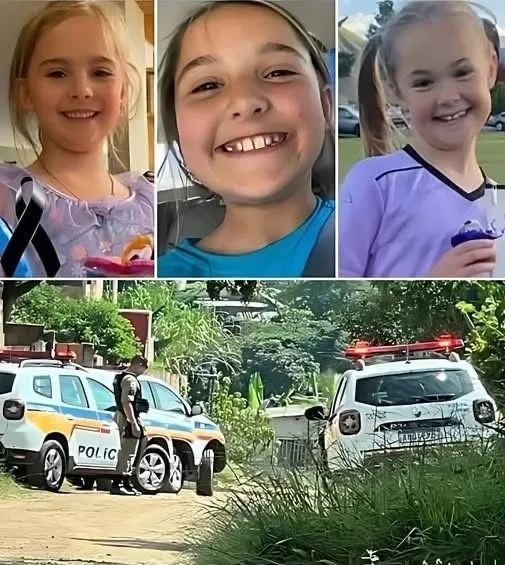
WENATCHEE, WASHINGTON — What began as a routine custody visit ended in one of the most horrifying tragedies to strike Chelan County in recent memory. Three young sisters—Paityn, 9, Evelyn, 8, and Olivia Decker, 5—were found dead near Rock Island Campground after visiting their father, 32-year-old Travis Decker. Authorities have since launched a nationwide manhunt, describing Decker as armed, dangerous, and possibly attempting to flee the country.
The case has shaken the entire Wenatchee community—a small, tight-knit town now struggling to comprehend how a father once described as “devoted” could commit such a monstrous act.
A Visit That Should Have Been Routine
On May 30, 2025, Travis Decker arrived at his ex-wife’s home to pick up the girls for a court-approved visitation. The plan was simple: he’d return them by 8 p.m. that evening. But when the time came and went, and his phone went straight to voicemail, their mother, Whitney Decker, immediately sensed something was wrong.
She contacted police that night, reporting the girls missing. Investigators noted early concerns over Travis’s mental health—records showed he was struggling with post-traumatic stress disorder (PTSD) and had exhibited increasingly erratic behavior in recent months.
By the next morning, the Decker family’s nightmare was just beginning.
The Search Begins
On May 31, authorities issued an Endangered Missing Persons Alert, though it fell short of the criteria for an AMBER Alert. Local volunteers joined law enforcement in combing rural highways, rivers, and trails near the Decker residence. Whitney, desperate for answers, pleaded publicly for her daughters’ safe return, saying through tears, “If anyone sees them, please—just bring them home.”
Over the next two days, state police, the National Guard, and the U.S. Marshals Service joined the effort. Helicopters scoured wooded areas, while K9 teams tracked faint scent trails leading toward the Cascade foothills.
Then, on June 2, a hiker stumbled upon a grim discovery.
The Discovery at Rock Island
The hiker found an abandoned 2017 white GMC Sierra pickup near Rock Island Campground, about 20 miles north of Wenatchee. The vehicle’s doors were unlocked. Inside were Travis’s wallet, cellphone, and personal belongings—signs he’d left in a hurry.
A few hundred yards from the truck, search teams made a devastating discovery: the bodies of Paityn, Evelyn, and Olivia. The girls were found side by side, bound with zip ties and plastic bags over their heads. The autopsy later confirmed homicidal suffocation as the cause of death.
Investigators believe Travis murdered the children sometime on May 31 before fleeing into the surrounding wilderness. Blood found on the truck’s tailgate matched his DNA. Disturbingly, search history retrieved from his laptop revealed he’d been researching “how to cross the border into Canada without a passport” just days before the murders.
The Autopsy and Aftermath
By June 6, the medical examiner officially ruled all three deaths as homicide by suffocation. Forensic teams combed through Travis’s abandoned vehicle, uncovering blood from both human and animal sources. Investigators later confirmed the animal blood came from Decker’s dog, which was found alive and malnourished nearby.
Authorities believe Travis may have attempted to stage the scene before escaping on foot into the Cascade Mountains. Given his military background—he served in Afghanistan in 2014 and later joined the Washington National Guard—investigators warn he could survive off-grid for extended periods.
“This individual knows the terrain,” said Chelan County Sheriff James Molnar. “He’s trained in wilderness survival, and that makes this manhunt uniquely challenging.”
A Portrait of a Troubled Man
Travis Decker was once regarded as a model father—outdoorsy, patient, and deeply involved in his daughters’ lives. But according to court documents, that image had begun to crumble in the months before the murders.
The couple’s divorce in 2023 had been contentious, with repeated disputes over custody. The court had mandated that Travis attend anger-management courses and mental health counseling after Whitney raised concerns about his emotional volatility.
Friends say he had struggled since returning from active duty. “Travis came back from Afghanistan different,” said one former colleague. “He wasn’t violent, but he was distant. You could tell something inside him had broken.”
Family members describe a man torn between love for his daughters and a growing paranoia that the world was against him. One friend recalled him saying, “If I can’t have them, nobody will.”
The Ongoing Manhunt
Since June, authorities have received dozens of potential sightings, most in remote areas around the Columbia River Basin and Okanogan National Forest. Drones, helicopters, and K9 tracking units have been deployed daily.
The FBI, U.S. Marshals, and National Guard have joined the search. Border Patrol agents are monitoring crossing points into Canada, and Interpol has been alerted.
A $20,000 reward has been issued for any information leading to his capture.
“We will not stop until Travis Decker is found,” said U.S. Marshal Carla Rios. “He took the lives of three innocent children. There is no hiding from justice.”
Despite the intense search, weeks have turned into months without a confirmed lead. Some investigators believe he’s hiding in the wilderness; others think he may have received help to cross the border.
The Family’s Grief
Back in Wenatchee, the Decker family continues to mourn. The sisters were laid to rest side by side at Riverbend Cemetery, their caskets adorned with flowers and handwritten notes from classmates and teachers.
Hundreds attended the funeral. The girls’ mother, Whitney, gave a tearful eulogy:
“They were sunshine. They loved music and painting and catching frogs in the garden. I want people to remember them laughing—not for what he did.”
Community members have rallied around her, raising over $200,000 through online fundraisers to support legal expenses and awareness campaigns for domestic violence and mental health intervention.
Lessons from a Tragedy
Experts say this case highlights deep flaws in how courts assess risk in custody disputes involving mental illness. Despite warnings about Travis’s instability, visitation was granted with minimal supervision.
“Too often, the system assumes that a parent’s biological right outweighs potential danger,” said Dr. Elena Hart, a child psychologist specializing in family trauma. “This tragedy exposes that blind spot—and it cost three lives.”
Advocates are now calling for legislative reform to require stricter psychological evaluations and supervised visitation in cases where one parent has a documented history of instability or violence.
Remembering the Sisters
Paityn loved gymnastics. Evelyn wanted to be a veterinarian. Olivia never went anywhere without her stuffed rabbit, Daisy. Teachers described them as inseparable—“three bright stars who lit up every room.”
Their school has dedicated a memorial garden in their honor, with a plaque that reads: “Love Never Forgets.”
A Father Turned Fugitive
As of October 2025, Travis Decker remains at large. Authorities believe he is likely armed and capable of surviving in harsh terrain.
The Chelan County Sheriff’s Office continues to urge the public: “Do not approach him. Report any sightings immediately. Someone, somewhere, knows something.”
Whitney still keeps a light burning in her window every night. Not for hope of reconciliation, but for justice.
Her message to other parents is simple:
“Trust your instincts. If something feels off, fight to protect your kids. Don’t wait for the system to catch up.”
The case of the Decker sisters will forever haunt Wenatchee—a story of love, loss, and the catastrophic consequences of a system that failed to see danger until it was too late.
And until Travis Decker is found, that small Washington town will remain suspended between heartbreak and fury—demanding answers, and waiting for justice.
It was supposed to be just another explosive night on CNN, but what unfolded became the most shocking moment in modern political history. The prime time special, “National Security and Crisis,” had drawn millions of viewers, all eager to witness the confrontation between Hillary Clinton—the once untouchable political titan—and Kash Patel, President Trump’s controversial nominee for FBI Director. No one could have predicted that by the end of the broadcast, the Clinton dynasty would lie in ruins, its secrets spilled out for the world to see.
The tension was palpable as Anderson Cooper introduced the guests. Hillary Clinton entered the studio like a queen returning to her court: her $50,000 Oscar de la Renta suit sparkled under the lights, every diamond in her jewelry collection placed to remind viewers of her power. Her hair and makeup team had worked for hours to perfect her image of invincibility.
She wasted no time, launching into cruel personal attacks against Patel. “Are we really pretending this gas station clerk’s son has any business near the FBI?” she sneered, her voice dripping with contempt. Patel, the son of Indian immigrants, sat quietly, his expression unreadable.
But the mood shifted when Patel reached for a large banker’s box beside his chair. The label, written in bold black marker, read:
“Hillary Clinton – 40 Years of High Crimes.”
He spoke calmly, “You’ve questioned my qualifications and intelligence. That’s fair game in politics. But perhaps we should examine your record.”
With deliberate precision, he opened the box, revealing hundreds of files—each labeled with a different crime. The studio fell silent as Patel began to lay out his evidence.
Patel started with the infamous 33,000 emails Clinton had deleted while under congressional subpoena. “Nothing digital is ever truly destroyed, Secretary Clinton. Not when the NSA has been watching the whole time.” He held up documents showing communications with foreign intelligence operatives, the sale of state secrets, and payments funneled through shell companies. The audience gasped as Patel described wire transfers, donation records, and thank-you letters—each piece of evidence more damning than the last.
“506 Americans dead,” Patel said, his voice trembling with fury. “All so Hillary Clinton could live like a queen while American patriots died like dogs.”
The second file was even thicker. Patel exposed the Clinton Foundation’s finances, revealing that less than 4% of $2.5 billion in donations had gone to actual charitable programs. The rest funded private jets, luxury trips, executive salaries, and personal services. “You weren’t running a charity,” Patel declared. “You were running an auction house where American policy was sold to the highest bidder.”
He recounted heartbreaking stories of villages in India that never received promised clean water, AIDS clinics in Africa that got no medicine, and the $5 million meant for wells diverted to Chelsea Clinton’s wedding planning.
Then came Haiti. Patel revealed that the Clinton Foundation had raised $14 billion for earthquake relief but built only six houses. The rest of the money vanished into administrative costs, gold mining permits, and luxury hotels. “You didn’t just steal charity money,” Patel said, voice heavy. “You stole hope from people who had already lost everything.”
Patel pulled out printouts of emails from the Wikileaks releases, exposing Clinton’s disdain for voters. “Taco bowls,” she called Latino supporters; “super predators” for Black Lives Matter activists; “deplorable inbred hillbillies” for Trump supporters. He revealed the rigged Democratic primary against Bernie Sanders, with voting machines manipulated and debate questions leaked in advance.
“You didn’t just steal an election,” Patel said. “You stole their faith in America.”
The next file shattered Clinton’s last illusion: respect from her own party. Patel played recordings of Obama and Biden expressing their contempt for Hillary, calling her “evil,” “corrupt,” and “cancer to the Democratic Party.” Internal DNC documents described her as “the most hated politician in American history,” with recommendations to sabotage any future campaigns.
Even Bill Clinton’s voice appeared on screen, admitting their marriage was a business arrangement and expressing hope that she would “drop dead” first.
Patel’s final file was personal. He had known some of the Americans who died in Benghazi. He produced classified communications, surveillance footage, and transcripts showing Clinton refusing aid to Ambassador Stevens and others under attack. “You wanted them dead,” Patel accused. “Stevens had evidence of your weapons trafficking. His death meant your secrets stayed buried.”
He played audio of Clinton laughing about the tragedy at a private dinner, admitting to murder and mocking grieving families.
As Patel finished his presentation, Hillary Clinton sat frozen, her carefully crafted image shattered. Her family and inner circle appeared on video, each confirming they had turned state’s evidence. Bill and Chelsea denounced her, promising to testify against her in court.
Messages flooded in: the Clinton Foundation dissolved, assets frozen, charges filed. Pelosi and Biden publicly distanced the party from her. Clinton’s empire was collapsing in real time.
Clinton, overwhelmed, tried to flip the desk but failed. Her suit tore, her wig fell off, exposing thinning gray hair. She collapsed on the floor, sobbing uncontrollably. “I’m nothing,” she whispered. “Just a gas station clerk’s son destroyed me.”
Security carried her away as cameras rolled, broadcasting her breakdown to millions. Outside, celebrations erupted across the country. In Haiti, people danced in the streets. In Benghazi, families wept with relief.
The next morning, federal agents arrived with arrest warrants. Clinton was charged with crimes ranging from treason to charity fraud to murder. Bail was denied. As she was led away in handcuffs, she looked at the cameras one last time, her eyes empty of everything but regret.
“I was supposed to be president,” she whispered. “I was supposed to win.”
A federal agent replied, “Ma’am, you did win something—the award for most corrupt politician in American history.”
Cash Patel was confirmed as FBI Director by a unanimous Senate vote the following week. His first act was to create a task force to rebuild Haiti with recovered Clinton Foundation funds. His second act was to visit his father at the gas station, embracing him and saying, “You taught me that honest work beats dishonest money. Every time.”
Father and son stood together, proof that the American dream still lived, even if it had to destroy American nightmares like Hillary Clinton to survive.
The gas station clerk’s son had won. Truth had won. Justice had won.
And Hillary Clinton would spend the rest of her life in a federal prison cell, wondering how a nobody had destroyed somebody who turned out to be nobody after all.


No comments: