

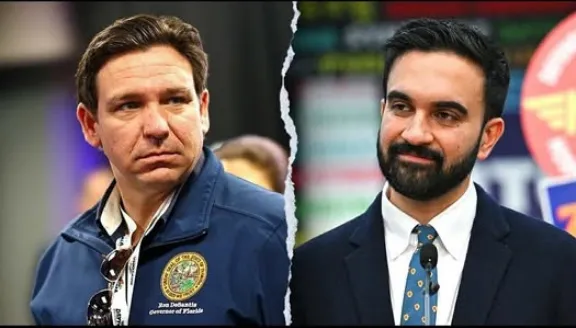
Amid all the chatter about the New York City mayoral race, both the jokes and the serious conversations are pointing in the same direction — people are already talking about leaving. With Democratic Socialist Zohran Mamdani now in charge, the idea of a mass exodus from the Big Apple doesn’t sound so far-fetched.It’s not just talk — it’s a very real possibility. A recent Daily Mail poll found that roughly 765,000 New Yorkers say they would “definitely” leave the city if Zohran Mamdani took office, with another 2 million saying they would seriously consider it.
That’s nearly three million people looking for the exit — taxpayers, business owners, and working families who’ve had enough of the left’s social experiments.
“The departure of at least 765,000 citizens would be one of the biggest mass exoduses in American history, with a population equivalent in size to Washington DC, Las Vegas or Seattle leaving the Big Apple,” the news outlet noted.
Where would they go? The same places freedom-loving Americans have been fleeing to for years — red states with lower taxes, affordable living, and booming job markets. Florida is at the top of that list. During the COVID lockdowns, tens of thousands of New Yorkers packed up and headed south when then-Gov. Andrew Cuomo buried the state under one draconian restriction after another.
And now, history might be repeating itself. With a socialist mayor in charge, another wave of New Yorkers could soon be heading for the exits. Florida Governor Ron DeSantis has been sounding the alarm for months. In July, he said this after Mamdani won the Democratic primary:
“We’ve absorbed a lot of people over the years,” DeSantis told Fox News’ Sean Hannity on Tuesday evening. “I think this guy’s policies, soup to nuts, are probably the most radical left that I’ve ever seen of a major party candidate in a big jurisdiction.”
“I’m telling you, I think I’m going to have to charge an entry tax or something because of this guy, because I don’t know if we’re going to be able to absorb everyone that’s going to flee his poor rule if he gets in,” DeSantis added.
Then, on Election Day, DeSantis added:
DeSantis even got a laugh on X recently when he quipped — though maybe only half-jokingly — that if the wave of New Yorkers keeps coming, he might have to start redirecting them to southern Connecticut:
It’s a familiar frustration among conservatives in red states — people fleeing blue-state chaos for the freedom and affordability of the South, only to drag the same failed ideology with them. They escape high taxes, suffocating regulations, and woke nonsense, but then vote for the very policies that made their hometowns unlivable in the first place.
It’s how once-sane, affordable red areas start turning blue — housing prices rise, local governments drift left, and suddenly the same cultural rot that wrecked New York or California starts creeping into Texas, Florida, and Tennessee. Conservatives down south aren’t being mean when they complain about it — they’re being real. They fought hard to build free, thriving communities, and they don’t want to watch those places destroyed by imported liberalism.
Just thirty minutes ago in Washington, D.C., something rare happened—something that caught even longtime observers of Barack Obama off guard.
Witnesses describe the moment as powerful, deeply personal, and unlike the carefully composed image many associate with the former president. It wasn’t a speech, a policy discussion, or a staged photo-op. It was raw emotion—unexpected, unscripted, and undeniably human.
For a man who spent eight years under the relentless glare of global scrutiny, such a display carries weight. Obama’s ability to connect through words is well known, but this moment pulled back the curtain on the man behind the presidency. It raised new questions: How much of the emotional burden of leadership lingers long after leaving office? And how often do the private struggles of public figures remain invisible until a rare moment of vulnerability slips through?
The Hidden Weight of Leadership
From natural disasters to acts of violence, Obama was no stranger to tragedy during his presidency. Each time, he was tasked with speaking not just as a leader but as a voice for millions who were grieving. He carried those moments publicly with composure, yet anyone watching closely could sense the toll.
Today’s unexpected emotion serves as a reminder that those burdens don’t vanish when the motorcades disappear. Former presidents, like anyone else, live with the echoes of their past decisions, regrets, and memories. What separates Obama is his willingness, even now, to let those emotions surface instead of burying them under polished rhetoric.
Strength in Vulnerability
Critics often equate strength with stoicism, but Obama has long shown a different kind of resilience—one rooted in honesty and compassion.
His tears at memorials, his pauses during speeches, and his moments of visible grief weren’t signs of weakness; they were evidence of a leader unafraid to feel.
That balance of empathy and authority has become a central part of his legacy. For many, seeing Obama express himself so candidly today reaffirms why his words once resonated so strongly: because they weren’t just political statements, they came from a place of lived emotion.
Why This Moment Matters Now
In a climate where political figures are often judged for their toughness, an unguarded show of emotion feels almost radical. It reminds us that leaders are not immune to the struggles, griefs, and hopes of ordinary life. Obama’s moment today is more than a passing glimpse—it’s a symbol of a leadership style rooted in humanity at a time when that quality often feels in short supply.
Conclusion
Barack Obama’s willingness to let his emotions be seen is a powerful reminder that true leadership isn’t defined only by policy achievements or public approval ratings. It’s also about compassion, authenticity, and the courage to be human even when the world is watching.
This rare display in Washington ensures his legacy remains not only that of a historic president, but also of a man whose heart was as present as his intellect.
For many, that combination of strength and vulnerability will always be what set him apart—a leader remembered not just for what he accomplished, but for how deeply he cared.


No comments: